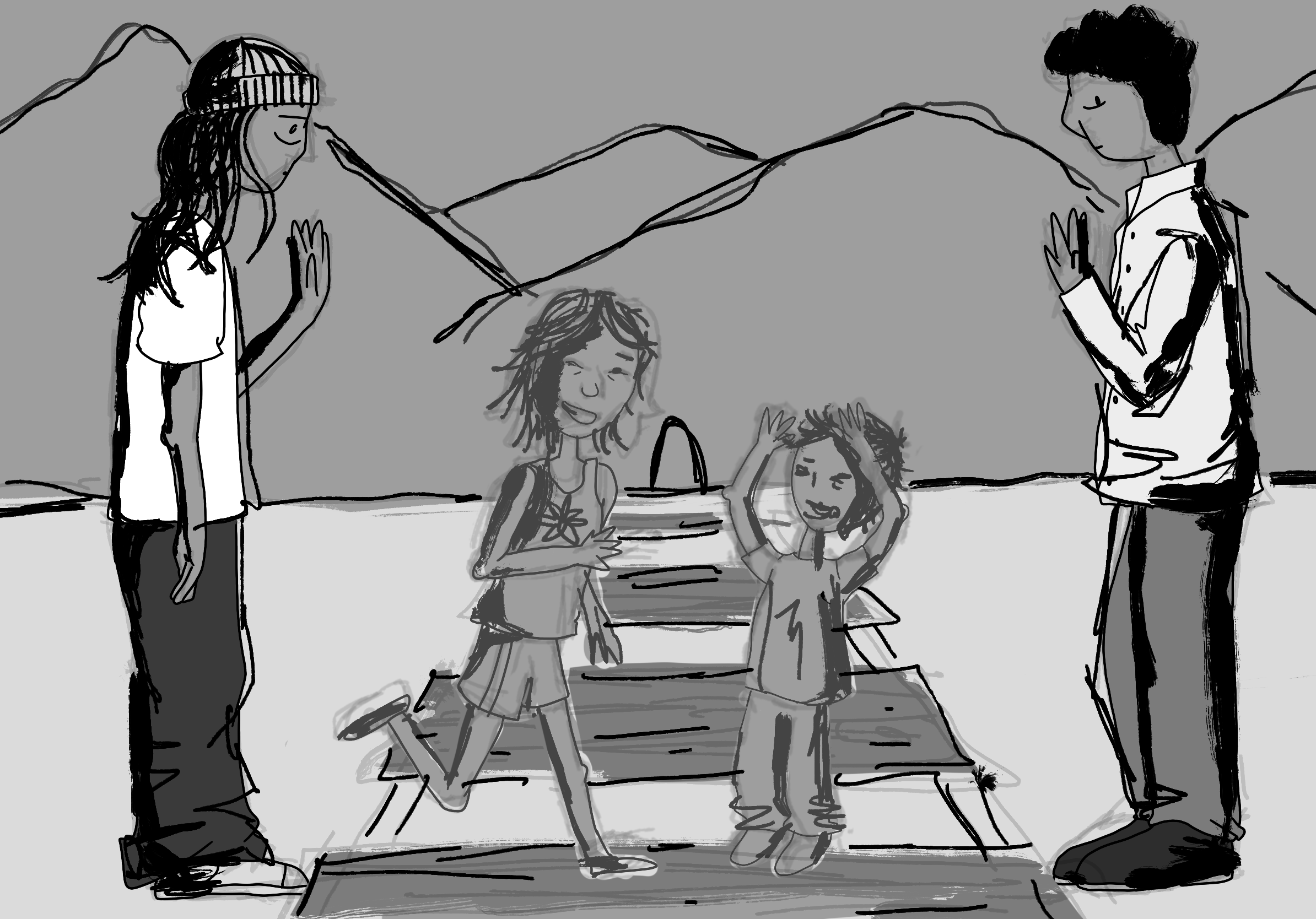
If suffering guarantees the happiness of everyone else, how much of it is acceptable? The Ones Who Walk Away from Omelas by Ursula K. Le Guin, describes a utopia in the fictional town of Omelas that is filled with joy, prosperity, and social unification. However, behind the scenes lies a horrible reality. This society can only exist if one child is forced to suffer their whole life. Ultimately, Le Guin notes that the importance of individual freedom is more important than the happiness of the collective.
Le Guin asks us the question, “Do we know what happiness is?” She remarks, “We have a bad habit, encouraged by pedants and sophisticates, of considering happiness as something rather stupid. Only pain is intellectual, only evil interesting.” Le Guin directly addresses the main problem she sees in modern society: we are unable to imagine true happiness. She directly addresses the audience (and herself) of having a “bad habit,” the belief that suffering is the ultimate joy. She shows that happiness is not built on denial or oppression but is something we are simply unable to imagine. In order to have an ounce of this imagined happiness, it is necessary we follow what we want rather than what society wants.
Many view the child’s suffering as a necessary sacrifice. The people describe the treatment of the child as just saying, “to exchange all the goodness and grace of every life in Omelas for that single, small improvement: to throw away the happiness of thousands for the chance of happiness of one: that would be to let guilt within the walls indeed.” Most of the people in Omelas rationalize the child’s suffering as a utilitarian choice. The child’s suffering is for the greater good of Omelas’ citizens and choosing to “throw that away” would ruin the lives of many. Le Guin emphasizes how the cost of complicity in a society negatively alters the moral standing of that society. Choosing to build a society on suffering makes a society morally hollow, regardless of the number of people who benefit. The story forces us to take a holistic view of what a society should be built on, questioning whether collective pleasure outweighs an individual's suffering.
Some who see the child in suffering choose to leave Omelas. “They leave Omelas, they walk ahead into the darkness, and they do not come back. The place they go towards is a place even less imaginable to most of us than the city of happiness. I cannot describe it at all.” The action of people leaving Omelas represents a self-made moral decision to leave a heaven that is built upon suffering. Le Guin’s words, “a place even less imaginable,” reminds us that because Omelas itself is unimaginable, so is a world where no one truly suffers again. In other words, our moral imagination cannot accept a world of injustice. The people who leave Omelas are worded as true characters of upstanding morals, beyond our imaginations who choose individual freedom at the cost of their own happiness.
Individual freedom is more important than the happiness of the collective. Through Le Guin's portrayal of the citizens, the child’s suffering, and the moral choices some citizens make, she exposes the moral weaknesses our society has. The story forces readers to question their own beliefs of happiness, morals, and sacrifice. In the end, The Ones Who Walk Away from Omelas by Ursula K. Le Guin makes us ask, “is our comfort based on the suffering of other(s) as well?”