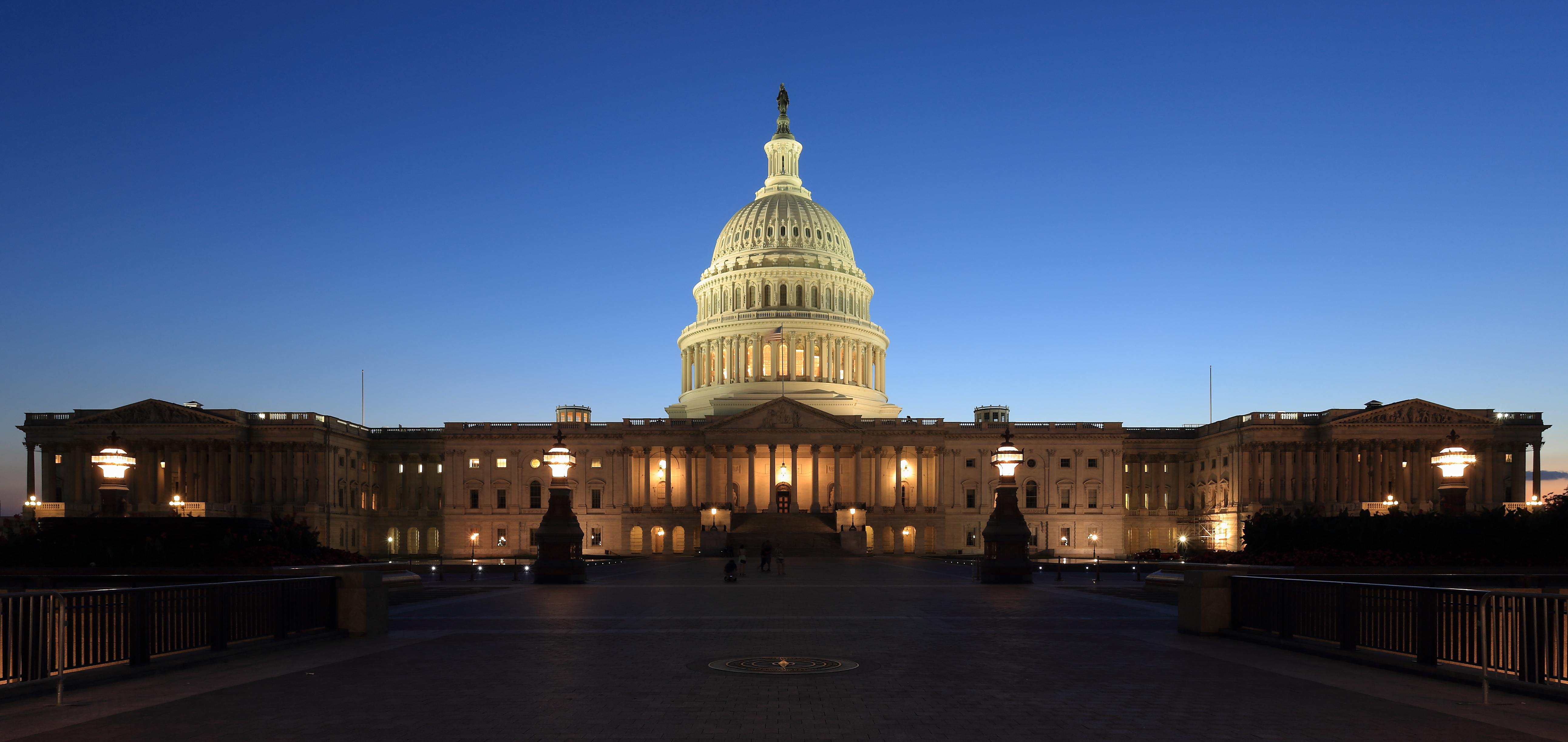
On November 3, the world watched as American voters delivered a resounding rejection of President Trump and the Republican Party. While Trump has two years left in office, losing control of the United States (U.S.) Congress is expected to have a profound impact on American —and thus international—politics, including trade relations with Canada.
For many Canadians, the United States’ political system is difficult to understand. Like Canada, the U.S. has a bicameral legislature, meaning Congress has two chambers: the House of Representatives, often called the House, and the Senate.
The House serves fixed two-year terms, meaning all 435 seats are elected in every presidential and midterm election. House seats are allocated based on population, meaning the most populous state, California, has 52 seats, while six states have just one seat each.
Senate seat allocation never changes, as each state holds two seats. Senate terms last six years, but elections occur on a rolling basis, meaning about one-third of its seats are elected every two years. For the 2026 midterms, 35 of the 100 Senate seats were up for election.
The midterms are usually interpreted as the voting population’s impression of the president’s performance so far. In the weeks and months leading up to November 3, Trump repeatedly told voters to pretend he was on the ballot.1 Yet, as early election results began to show the ‘blue tsunami’, Trump posted on Truth Social:
“I wasn’t on the Ballot [sic] and if I was, we would have won IN A LANDSLIDE!”2
Approximately one hour later, Trump posted an AI-generated image of a red baseball cap with the word “VETO”, drawing attention to his executive power.3 Under the U.S. Constitution, all bills passed by the House and Senate must be presented to the president for approval. If he returns it with objections, the bill may still become law, unchanged, through a two-thirds majority vote in both the House and the Senate.
Congress overrides of presidential vetoes are rare, though Trump’s veto of the National Defense Authorization Act for Fiscal Year 2021 was successfully overridden by a Democrat-controlled House and Republican-controlled Senate to become law on January 1, 2021.
While the Democratic Party will control both chambers once the 120th Congress convenes on January 3, 2027, overrides of presidential vetoes will likely remain rare, as the Democrats do not hold a two-thirds majority in either chamber.
Nevertheless, the midterm results illustrate a significant swing in American politics. Republican strongholds like Texas, Mississippi, Kansas, Iowa, and both Carolinas elected Democrats to the Senate for the first time in decades. Kansas, most notably, had not elected a Democrat to the Senate since 1932.
Many states also elected new governors, state legislatures, and state judiciaries on November 3. The Democrats gained six governorships: Texas, Georgia, Alaska, Iowa, Nevada, and Ohio. They also flipped several attorney general offices and secretaries of state in traditionally Republican areas.
Democrat celebrations have dominated the first few days post-election, but the party is under significant pressure to make tangible impacts on voters’ daily lives. The new Democrat-controlled Congress must transform anti-Trump protest votes into genuine support for the Democratic Party platform by the 2028 presidential election. Otherwise, the balance of power may swing back in the Republicans’ favour.
With a majority in both chambers, Democrats may use the federal budget as leverage over Trump’s foreign policy, specifically, his controversial war in Iran. On November 4, Vice President JD Vance made a lengthy post on X, which included the blunt statement:
“The reason we lost is the war.”4
When speaking to reporters the same day, Trump agreed that Republican losses had been caused by the war in Iran driving up gas prices. He then added:
“If I had to do it again, I’d have to do it again because, long term, it’s the only answer. You can’t let Iran have a nuclear weapon.”5
In terms of the Canada-U.S. relationship, many politicians are hoping for improved trade talks once the 120th Congress takes office in January. Democrats, especially those elected in border states like Michigan and Maine, are expected to fight back against Trump’s tariffs.
On November 4, Conservative Party leader Pierre Poilievre said the midterm results demonstrate that “Americans hate tariffs”.6 He also labelled Canada’s greatest asset in trade negotiations as the “goodwill of the American people” and called on Prime Minister Mark Carney to use it as leverage.
The potential impact of the midterm results on trade talks with Canada and the war in Iran will remain unclear until the newly elected Congress takes office on January 3, 2027. However, American voters are clearly pivoting away from Trump and his languishing Make America Great Again movement as the 2028 presidential election looms.