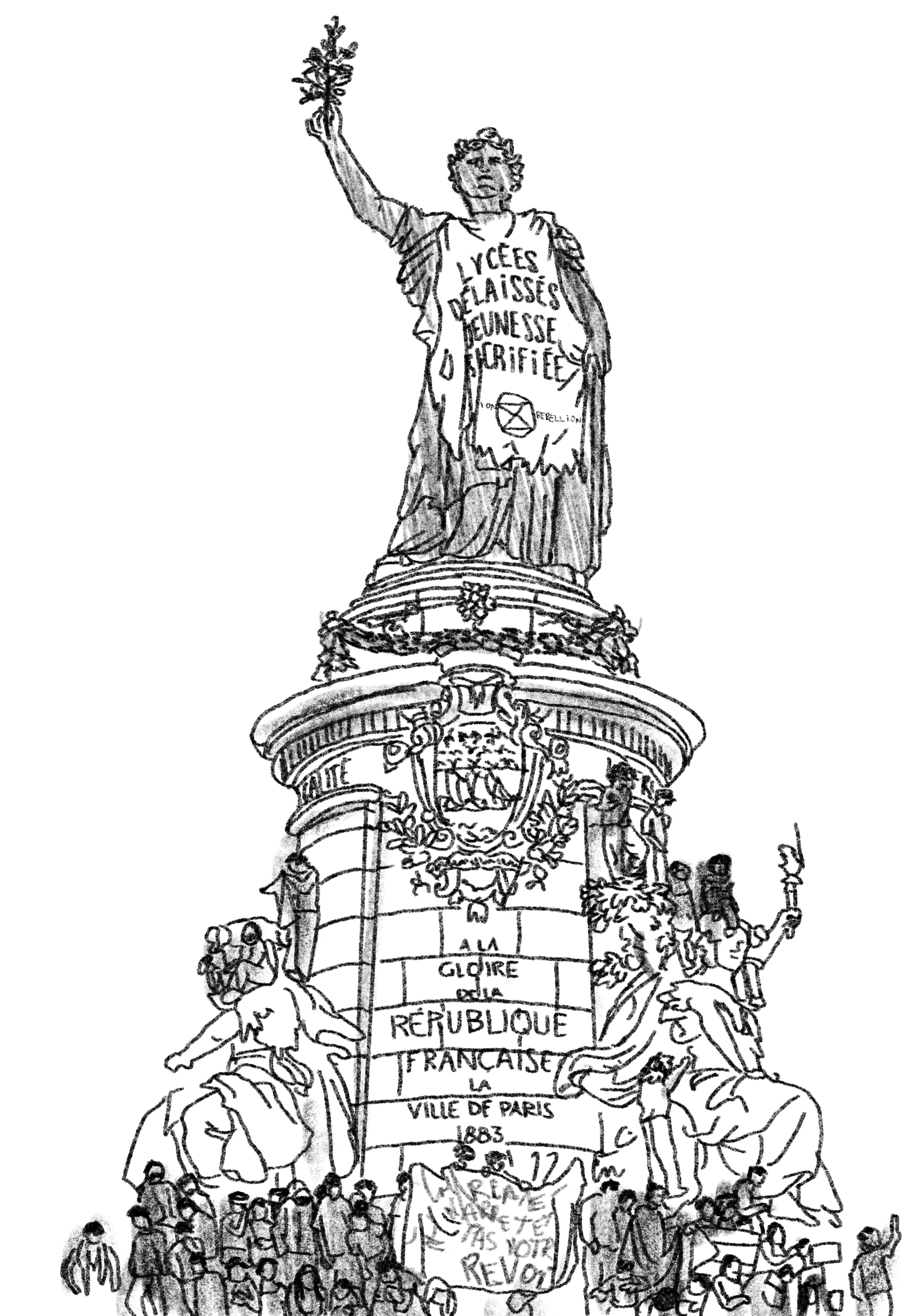
Since mid-September, millions of people have protested across France, voicing concerns about poor educational conditions, the rising cost of living, and the government’s 2027 budget.
The protests have ranged from non-violent marches to looting, riots, and barricades, leading to thousands of protesters’ arrests, many of whom are students.
The demonstrations have taken place in all major cities, including Paris, Marseille, Lyon, Toulouse, and Nice, as well as smaller cities and towns, forcing the government to deploy riot police and the national gendarmerie, a part of the French Armed Forces responsible for maintaining public order, across the country.
Demonstrations began on September 15 when the Union of French Electricity and other energy sector unions coordinated walkouts by electricity and gas employees to protest pay and rising fuel prices.
On September 21, students and teachers at Saint-Exupéry high school near Paris began protesting a lack of resources, overcrowded classes, understaffing, and poor facilities. While extra staff were soon sent to the school, ending the strike, their protest sparked nationwide demonstrations, which are still ongoing. Within a week, over 400 high schools were impacted, and over 440 individuals, mostly students, were detained by police.
The student protests coincided with French labour and trade unions preparing for the government’s 2027 draft budget. On September 29, over 300,000 workers from eight unions took part in a one-day strike in response to the expected public spending cuts in the 2027 budget. Most strikers were public sector employees, ranging from teachers to firefighters and healthcare workers.
The budget, presented on October 1, contains a notable €54m cut to public spending, including the fourth consecutive salary freeze for state employees. The freeze reduces public sector employees’ purchasing power as inflation and the cost of living grow. In response, labour unions are demanding a six-percent pay rise.
By mid-October, student and labour union protests had become part of a much wider movement. The Yellow Vest movement, which first emerged in 2018, has revived itself to take part in the protests against the rising cost of living.
From 2015 to 2025, energy prices rose by 60%, electricity by 43%, and fuel by 31% in France. Furthermore, France’s poverty rate is at its highest since annual records began in 1996. In 2024, 9.8 million people, or 15.4 percent of the French population, fell below the poverty line.3
Since 2017, when President Emmanuel Macron began his first term, prices have risen by 23.4%.3 In 2025, 28.8% of the French population couldn’t afford an unexpected expense without financial assistance, and 41.1% reported at least some difficulty in making ends meet, demonstrating the widespread impact of the cost of living crisis.3
Nationwide protests against the cost of living crisis occurred on October 17. The demonstrations turned violent in Paris and several other cities, with looters and rioters joining in. The French Interior Minister estimated that 1500 shops were defaced, burned, or looted, and over 2400 people were arrested.
In preparation for protests on October 24, local and national authorities approved protests on an individual basis and imposed curfews. Over 70,000 officers were on duty as almost half a million people protested, with over 110,000 in Paris alone.
The police response has been controversial, as forces have used tear gas, sound grenades, foam-round launchers, batons, and riot shields. Several students have suffered injuries during protests, with one teenager losing an eye after being struck by a foam bullet, another losing a hand from a stun grenade, and another suffering a smashed jaw from tear gas.
The Inspection Générale de la Police Nationale has opened 36 investigations into alleged police misconduct in response to the violence used against minors.
Yet, some protesters have also used violent tactics, targeting businesses, public spaces, and police officers. Certain participants have worn hoods or masks to hide their identities while setting fire to objects and buildings. Many students erected barricades, forcing schools to close.
President Macron met with student representatives at Élysée Palace on October 23, hearing their concerns about the lack of concrete action to address problems in the education system. Two days earlier, Prime Minister Sébastien Lecornu met with trade union leaders, but the unions were left disappointed and have called for another strike on November 5.
The French population will have a chance to air its economic and political grievances against the current government when it elects a new president on April 18, 2027. The increasingly unpopular Macron is ineligible to run, having served the maximum two consecutive terms.
The new president will have the constitutional right to dissolve the National Assembly and trigger parliamentary elections if they desire a parliament more aligned with their agenda.
The protests will continue until students, workers, and labour unions receive an adequate, concrete response from the government.