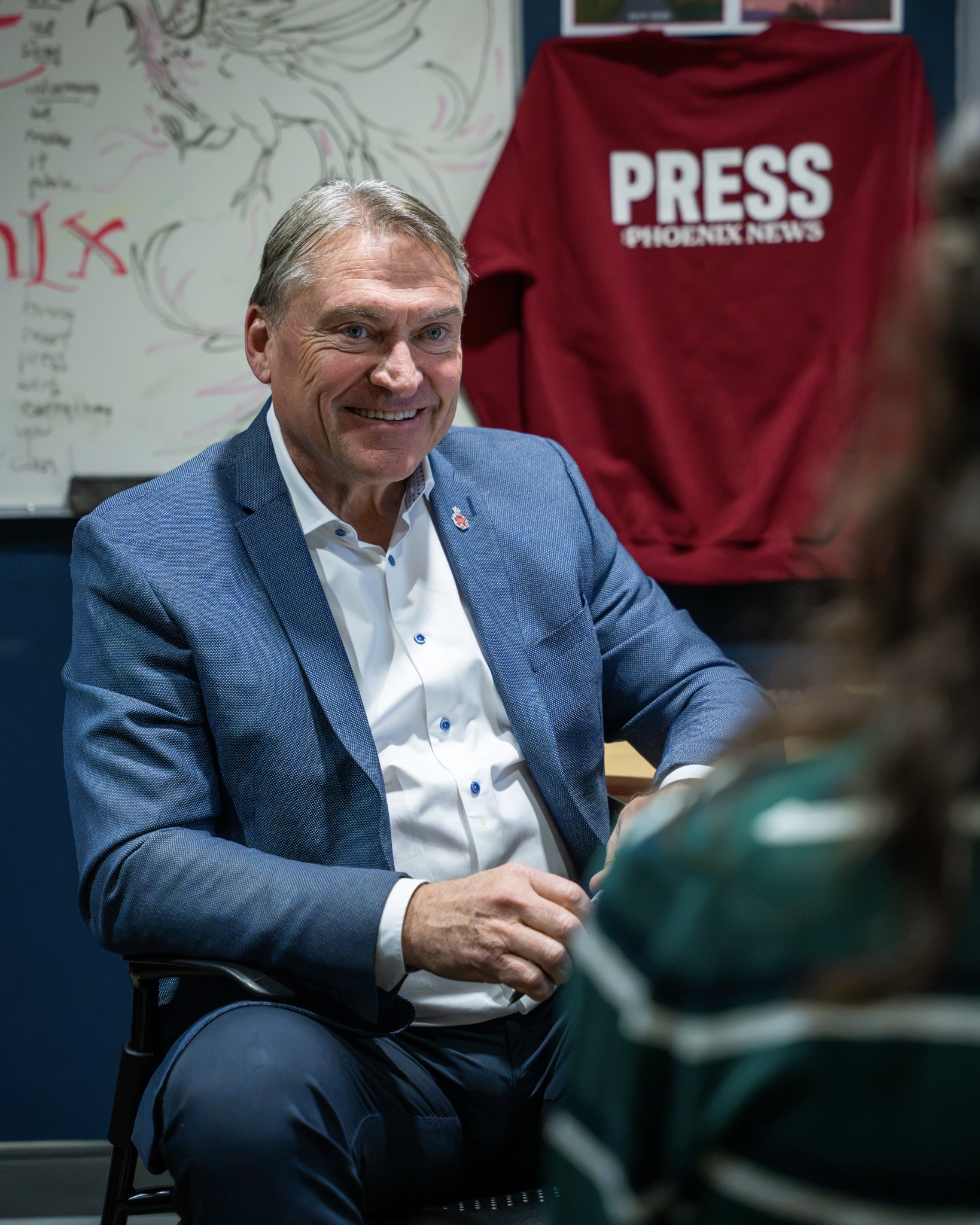
Ahead of the municipal election on October 17, The Phoenix News spoke with election candidates Mayor Tom Dyas and Councillor Ron Cannan to discuss issues impacting Kelowna’s student population.
The vote will elect one mayor, eight councillors, and four school trustees. Through majority-vote decision-making, the City Council must set policy direction to provide good government, services, and laws; responsibly manage public assets; and foster Kelowna’s “economic, social and environmental well-being”.1
The third candidate for mayor, Andrew Uitvulgt, received 227 votes, or 0.12% of the vote, in 2011.2 He has not published a campaign platform and is thus not expected to be a serious contender.
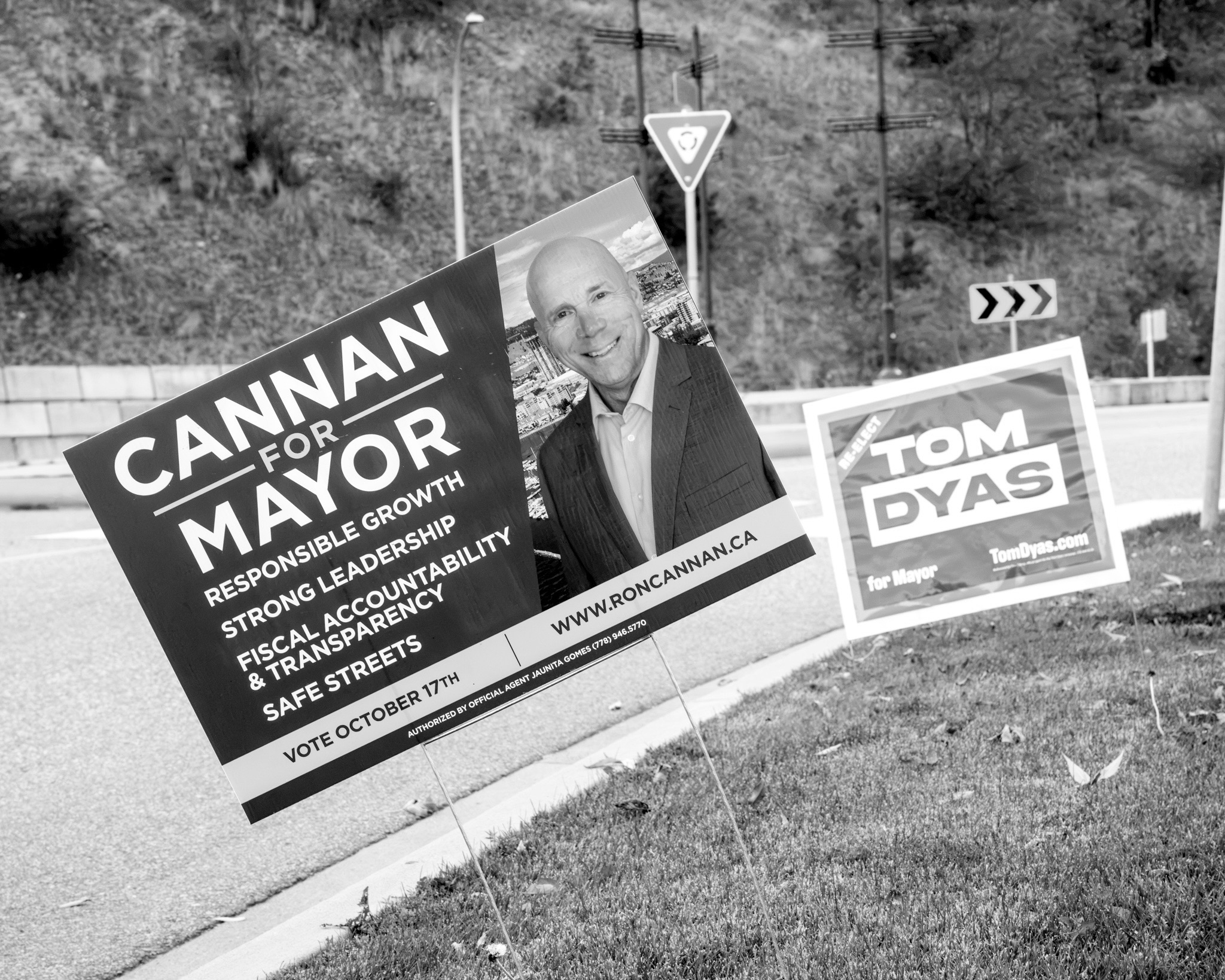
Tom Dyas and Ron Cannan both served in the previous council term, Dyas as mayor of Kelowna and Cannan as a city councillor. During the four-year term, they clashed over tax increases and salary increases for City Council representatives. Now, they are facing off in a bid for Kelowna’s top political position.
Before becoming mayor in 2022, Dyas had no previous political experience. He campaigned on bringing a business-minded approach to municipal governance, using his 36 years in the insurance industry as experience. His company, TD Benefits, provides health and dental plans to Okanagan businesses and is the Kelowna Chamber of Commerce’s exclusive insurance provider.3 Dyas’s son has led the firm since 2022.4
Similarly, Cannan has a long history in the business industry, having opened convenience stores in Edmonton and working as a sales supervisor for Coca-Cola in the 1980s. In addition, he helped set up Kelowna’s Costco store in 1991 and runs his own commercial banking and consulting firm.
In contrast to Dyas, Cannan has over 22 years of experience in various levels of governance. He first served as a councillor from 1996 to 2005, then again since 2022. From 2006 to 2015, he was the Member of Parliament (MP) for Kelowna–Lake Country as a member of the Conservative Party.5
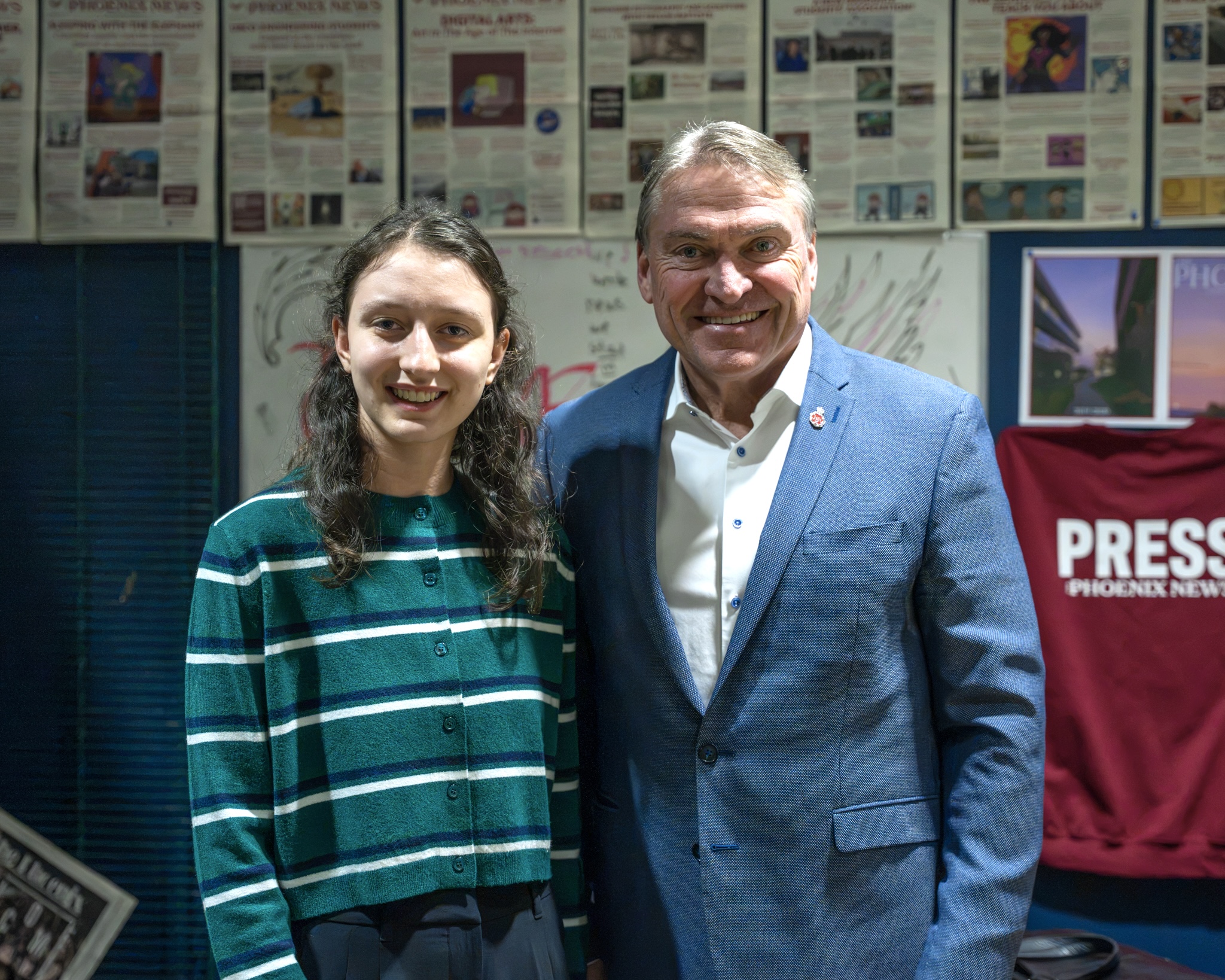
Municipal elections are non-partisan; therefore, Cannan’s campaign is not associated with any political party. In conversation with The Phoenix News, Cannan expressed his appreciation for the lack of political parties in local governance. Rather than being swayed by party pressure, he can simply vote for what best suits his constituents.
Dyas’s 2026 election campaign focuses on continuing the momentum built over the past four years. His main platform points are safer streets, increased housing availability and affordability, a compassionate approach to homelessness, new infrastructure, service-based budgeting of tax dollars, and a more prosperous economy.6
Cannan’s election platform focuses on responsible growth, safer streets, increased housing availability, lower taxes, accountable spending, and more transparency from City Hall. 7
The Phoenix News interviewed Dyas and Cannan on September 258 and 159, respectively. These conversations are summarized below, organized by topic.
Housing Affordability
Dyas was keen to point out his achievements in the housing sector over the past four years. He cited an increase from one to six percent during his time in office, as 7,500 homes were built in 2023 and 2024 combined.
He also discussed several projects aimed at improving housing affordability, such as the Fast Track Infill Housing project, a tax deferral structure for rental properties, and a 60-year lease of city land in Rutland to a developer. He argued that each of these projects will create affordable housing units by reducing building costs.
He also plans to advocate for a GST break from the federal government on products used to build new properties, hoping that reduced building costs will lower rental costs.
With Cannan serving on the City Council since 2022, it is difficult to distinguish between his and Dyas’s impact, especially in housing. In conversation with The Phoenix, Cannan discussed Kelowna’s new short-term rental regulations, effective June 1, 2026, which he believes will help students find housing for the eight-month academic year, rather than a full 12 months.
Cannan also mentioned that his platform’s prioritization of homes for families, seniors and the workforce will create better opportunities for students to own a home after graduation.
Public Transportation
In the last academic year, the average UBCO student used public transport 18 times per month. When asked how he will improve Kelowna’s transportation system, Dyas pointed out that the provincial government runs the transit system through BC Transit. However, he is aware of the desired transit improvements. In 2024, he responded to students’ safety concerns about Route 84 by increasing its evening service.
He also explained that the city has tripled its investment in transportation under his leadership, despite transit always running at a loss. Speaking about public transportation, he said: “It’s a community service that’s needed, but it’s not profitable to a city. It’s something we backstop to make sure it’s as effective as possible.”8
With the current transit centre, Kelowna and its surrounding communities have a maximum of 115 buses available. Under Dyas, the city is “advocating hard”8 for a new transit yard that would house 230 buses. With more buses, BC Transit would be able to expand service.
“We’ll continue to listen to riders, to push BC Transit with regards to what needs to be done within this community to make it as effective as possible.”8
Cannan believes that the City of Kelowna should borrow the $250m needed to build a new transit yard and have BC Transit finance the loan, rather than waiting for provincial funding. He would like to accomplish this “within [his] term”9 if elected, though the plan would need BC Transit’s approval.
Homelessness
Dyas successfully advocated to the provincial government for the tiny-home model in Kelowna. The 180 tiny homes help individuals transition from homelessness to other supportive housing units. The homes provide opportunities to find employment, speak to a counsellor and meet with a representative from Interior Health. To date, the project has enabled 125 people to transition into permanent or supportive housing.10
Dyas is a strong advocate for Mandatory Compassionate Care, which would provide an avenue to professional treatment for those struggling with addiction and mental health issues. However, this falls under provincial jurisdiction, limiting the city’s capacity to address homelessness.
Alternatively, Cannan views the tiny homes project as a “band-aid solution”9 to a systemic problem. He also claimed that homelessness in Kelowna has worsened since 2022, despite the city spending millions of dollars to address it.
Both Cannan and Dyas are lobbying for the licence of Kelowna’s overdose prevention site not to be renewed. The site, which provides a space to monitor and treat overdoses, is “not properly managed”9, according to Cannan. However, he labelled the mayor’s approach of shutting it down without a long-term plan as “irresponsible”9.
Cannan is an advocate for a regional approach to homelessness. He has sought collaboration with the mayor of West Kelowna and the Chief of Westbank First Nation. Mayor Dyas, he claimed, has not met with either to address homelessness or substance abuse.
Infrastructure & Environmental Concerns
The City of Kelowna’s proposal for a Clement Avenue Extension from Spall Road to Highway 33 has faced backlash for potential infringement on the Rail Trail and local wildlife. When asked about the project, Dyas cited that over 120,000 cars drive through the Orchard Park and Clement Avenue, Spall Road and Enterprise Way corridor every day, compared to the 65,000 that cross the bridge.
Dyas explained that every infrastructure project undergoes a “proper environmental assessment”8 because “from a climate action standpoint, everything that we do, we’re aware of [the potential environmental impact]”. 8
Cannan claimed the Clement Avenue Extension project will not move on from its current preliminary design stage until the city receives provincial funding. He then labelled protecting the environment as the City Council’s “paramount”9 concern and believes economic growth should not be sought “at all costs”9.
From an environmental standpoint, Cannan criticized the Dyas and the City Council’s recent rezoning of half of the 18-hole Kelowna Springs golf course to industrial land.
He added that Kelowna needs to be “water wise and fire smart”9 after Okanagan Lake’s water level hit a record low at the beginning of August.
On September 15, Cannan publicly proposed creating a Central Okanagan FireSmart & Wildfire Resilience Council.
Accountability & Transparency
When asked how students can hold him accountable, Dyas claimed that the city’s “solid relationship”8 with UBCO proves that students already hold him accountable. He then added:
“Students hold me accountable by voting for me on October 17th.”8
He asserted that he wanted to participate in a debate with other mayoral candidates at UBCO to allow students to engage directly with candidates. He labelled Cannan’s lack of availability, which meant the event couldn’t happen, as directly contradicting his platform of openness and transparency. Cannan, however, claimed the reverse.
Dyas added that students can hold him accountable based on whether they think the city is “going in the right direction”8 in terms of infrastructure, advocacy and the partnership with UBCO on the new recreation centre.
Cannan believes Dyas has not been accountable over the past four years, despite his 2022 campaign focusing on transparency.
In 2024, an in-house commission found that Mayor Dyas and the City Councillors were owed a 15% and 35% salary increase, respectively.10 Cannan was the only councillor to refuse the pay increase, arguing that the financial surplus should instead be used to reduce the 4.7% municipal tax increase that year.11
If elected, Cannan will establish an independent review committee for procurement and purchasing policies to ensure the city’s $1.1 billion budget is allocated appropriately.
Cannan also drew attention to the Parkinson Recreation Centre (PRC) regeneration project. He wanted a referendum, for transparency’s sake, as it is estimated to cost $242 million.12 According to Cannan, the alternative process for public approval requires participation from 10% of eligible Kelowna voters, a percentage very difficult to reach.
Cannan believes that if Dyas were truly transparent, the commission reviewing the City Council’s salaries should have been independent, and Dyas should have set up a referendum for public approval of the PRC project. This article has offered a snapshot comparison of Dyas and Cannan’s campaign platforms. Students are strongly encouraged to do their own research before casting their vote.
If you have any questions you would like to ask the candidates yourself, drop by the SUO’s Civic Connect BBQ outside UNC on Thursday, October 8, from 12 to 3 p.m. The event will provide the opportunity to learn why municipal elections matter and how they impact students’ daily lives. Students will be able to raise their concerns and ask questions directly to mayoral and councillor candidates. Unfortunately, current city councillors are unable to attend due to mandatory regional district meetings.
To be eligible to vote, you must be a Canadian citizen, at least 18 years old, a resident of Kelowna, and have lived in B.C. for at least the past six months.
Advance voting is available October 7–16 at locations across Kelowna. There will be an advance voting station in UNC 200 on Wednesday, October 14, from 8 a.m. to 8 p.m. The general voting day is Saturday, October 17.