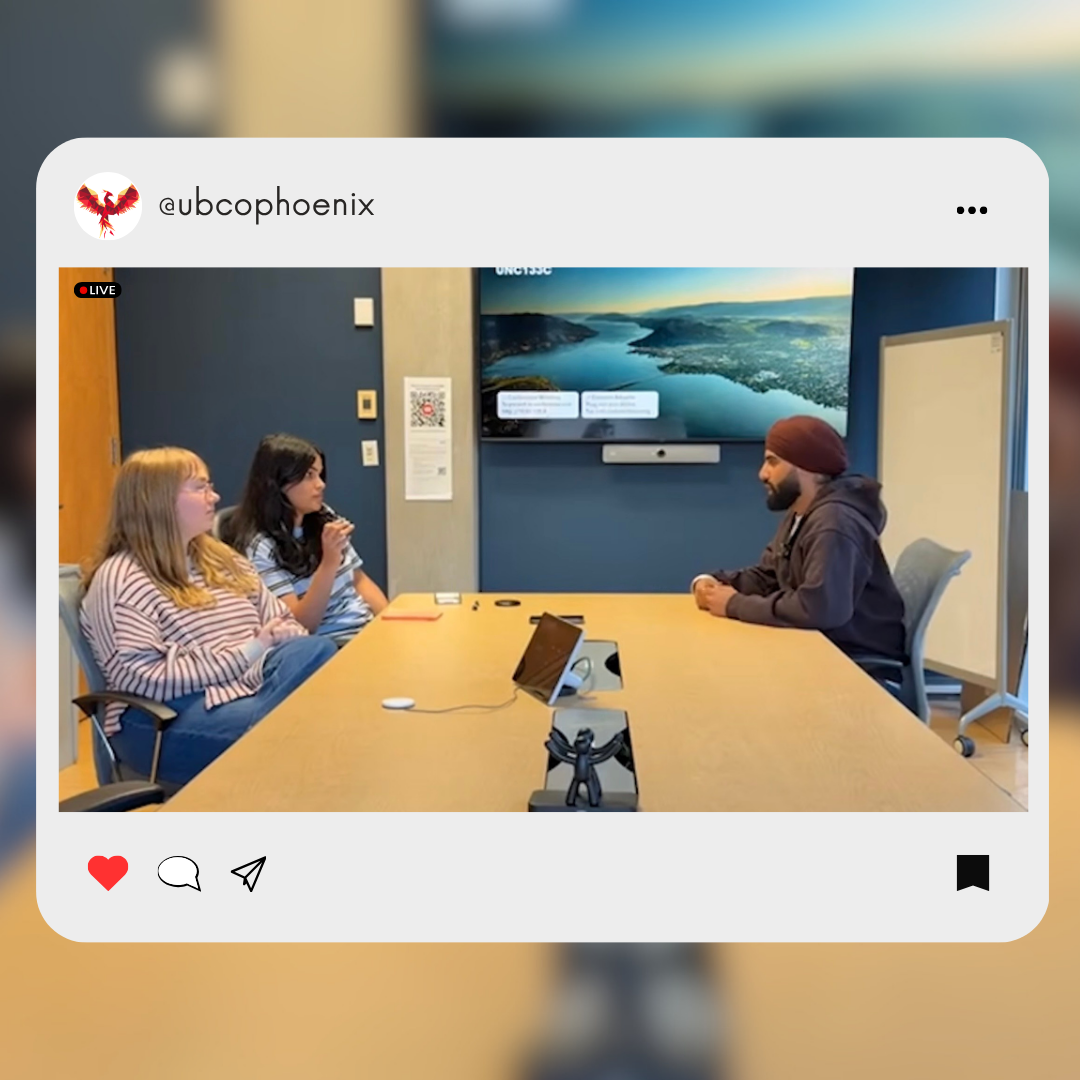
On September 4, 2026 at 6:30 p.m, The Phoenix News went live on the SUO’s Instagram account, in conversation with the VP Campus Life, Guransh Sandhu. The discussion was intended to learn more about Takeoff’26, the campus concert that is finally being revived. Over the next hour, The Phoenix learned more about the logistics behind planning a concert, the SUO’s budget for Takeoff, and how they choose their artists. The uncut recorded interview has since been posted on The Phoenix News’ YouTube channel and certain sections have been posted as reels on our Instagram page.
Sandhu placed emphasis on balancing student experiences with fiscal responsibility in a non-profit context. To foster community engagement, he talked about involving student performers in the concert and collaborating with campus clubs. The conversation also highlighted complexities surrounding artist vetting and how this influences programming choices. Overall, Guransh seemed to communicate a strong commitment to creating memorable and inclusive student experiences.
Sandhu started planning for the concert in mid-May, soon after taking office. This preparation included coordinating venue logistics, contracts, security, artist availability, city permits, and budget approvals, amongst other things. He stated that although students ask for big-name artists every year — such as Drake or Taylor Swift — prohibitive costs and limited challenges limit their choices. Furthermore, he explained that the decision to book three artists instead of one headline reflects a strategy to cater to diverse audiences and extend event duration.
Sandhu also addressed past concerns of campus life ‘fizzling out’ after big events by detailing his plans for frequent, low-barrier activities tailored for different student interests.
When asked about the SUO’s budget, Sandhu mentioned that since the SUO is a not-for-profit organisation, the concert typically runs at a deficit (around $30,000), funded by student fees and sponsorships. However, this deficit is covered by ticket sales, where any remaining surplus is allocated after the deficit is erased is unclear.
Transparency around spending remains limited until after the audit, which will be out in November of 2027. By then, there will be a newly elected board of directors, who would be unanswerable to this 2026-2027’s spending decisions, whereas the current board will have finished their term. This gives way to a gap in accountability within the SUO’s operations. When is the right time to ask the person responsible for allocating student resources how much they spent? Why can any concrete action not be taken by students in the present?
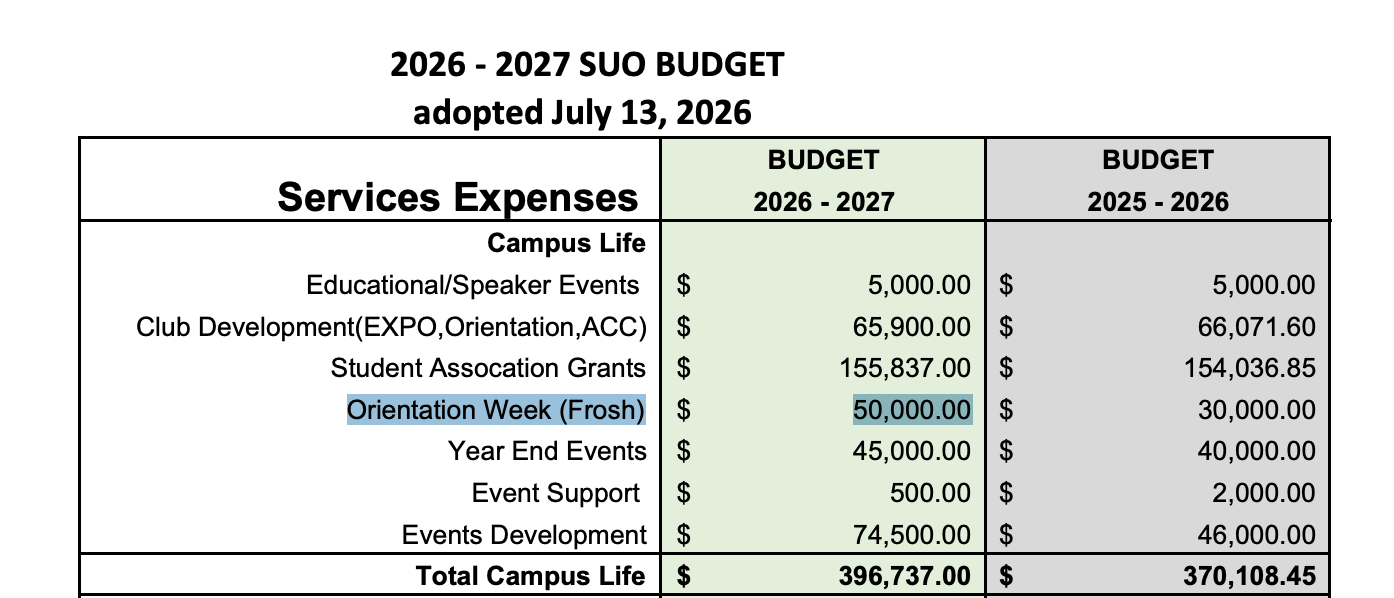
Additionally, Sandhu did not have an adequate response when asked about the SUO’s budget for the concert. He claimed to not have the answers until after the event and said he wasn’t allowed to say much on the matter for now. However, upon further investigation, The Phoenix discovered that the SUO’s website has this information readily accessible. For Orientation Week (Frosh), the SUO has budgeted $50,000 in 2026-27. To The Phoenix’s understanding, this amount goes towards the concert, and additional costs incurred beyond $50,000 are covered by ticket sales.
Our last question to Sandhu was about his comment to The Phoenix News when he got elected earlier this year. The newly elected VP Campus Life expressed excitement to bring back the campus concert, but with more inclusivity and gender representation this time. However, the three main artists performing in September 2026 are all male. Sandhu was questioned on this and he admitted that due to scheduling constraints, the SUO was only able to book with male headlining artists. Instead, female student performers were prominently featured to address diversity. It is difficult to hear that not a single female artist was available, and this raises questions about how much effort was made to reach out to and secure female artists.
Sandhu continued to explain that beyond popularity and music genre, the vetting process factors in artist history to avoid controversy and ensure a safe space is created for students. On this, he was told that Waka Flocka Flame has had certain controversial political beliefs in the recent past. Sandhu was unaware of the fact and mentioned that had he known, their decision might have been different. He was then asked whether he believes that students would be comfortable with their money going towards flying out an artist as controversial as this and have him perform on campus. To this, Sandhu said that there are other artists performing on the same stage that day, and that people should show up regardless if they are comfortable in doing so.
After the Phoenix News released a clip of the interview with Sandhu where the discussions about the headliner’s political opinions were shown, students took to the comments to express their thoughts. To briefly summarize some of the comments for context: there was frustration over the SUO selecting an artist without researching their background, debate regarding the selection of an American artist, and whether or not having the artist perform was an endorsement of their political views.
As The Phoenix values open debate and discussion, The Phoenix is glad students felt comfortable openly discussing this topic in our comments. Many different perspectives were shown and The Phoenix hopes students continue to engage with our content with a critical eye.
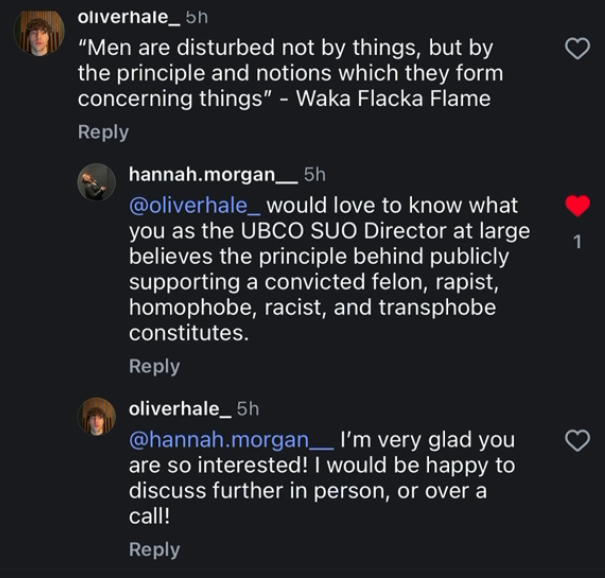
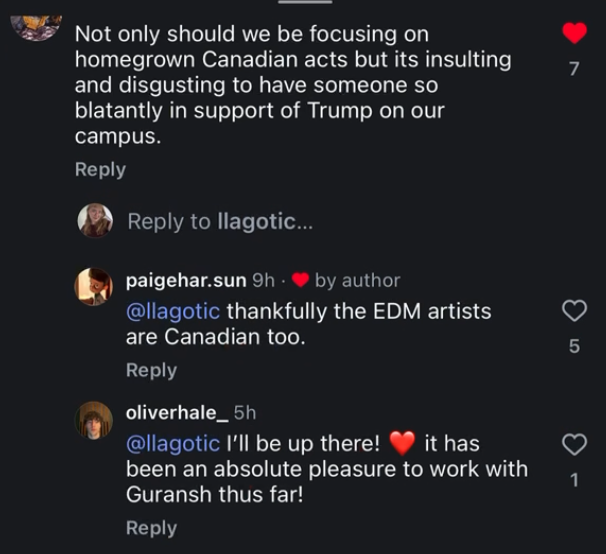
Despite this, at approximately 1:30am on September 6th, Director-at-Large, Oliver Hale started to make comments in response to the discourse students were having. By 9:30am, all of these comments had been promptly deleted, likely due to their unprofessional nature.
In the screenshot of the comments below, Hale incorrectly attributes a quote from the Greek Stoic philosopher Epictetus, to Waka Flocka Flame:
In the next image, Hale comments that he will be up on stage with Waka Flocka Flame during the Take Off concert:
When a student commented on concerns for what their fees were being spent on, Hale responded:
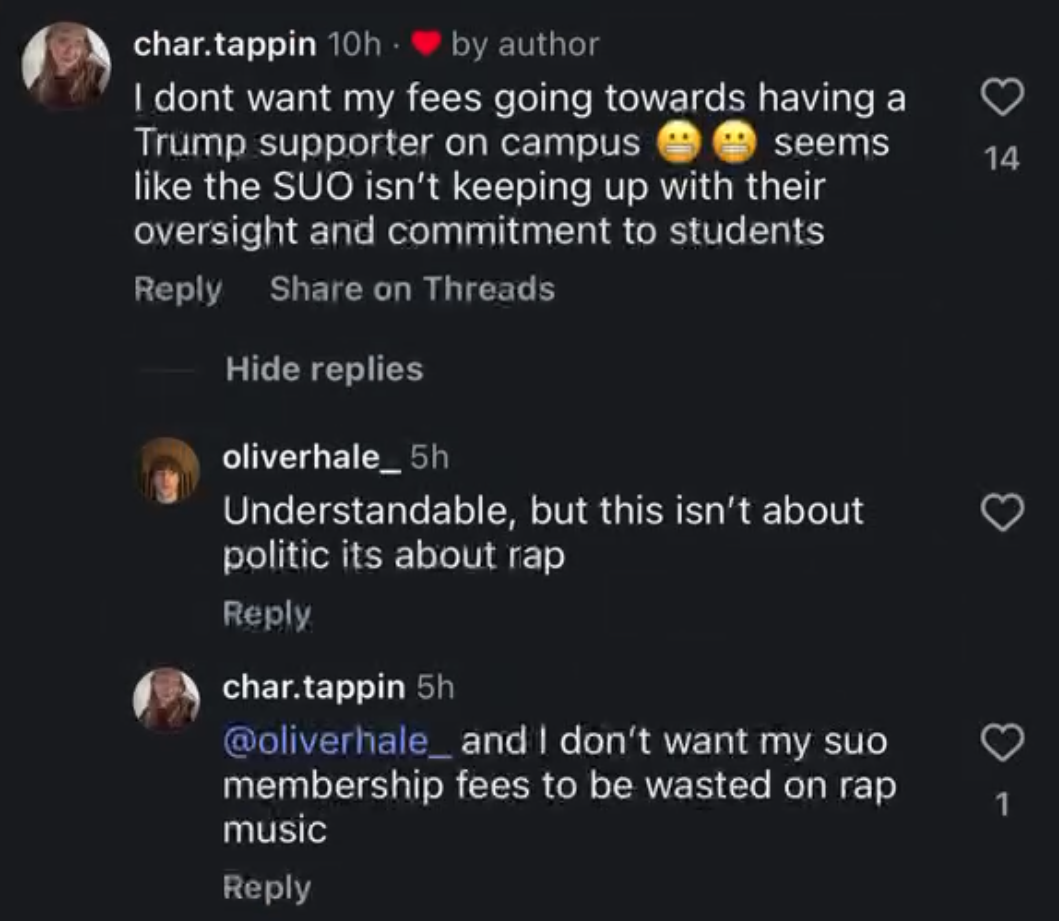
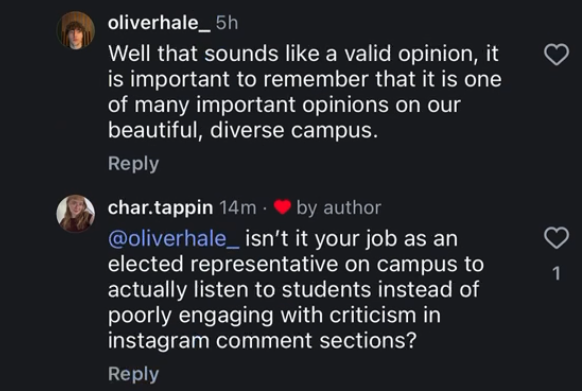
Hale responded again to this same student, stressing the importance of a variety of opinions, which he contradicts in the next set of comments:
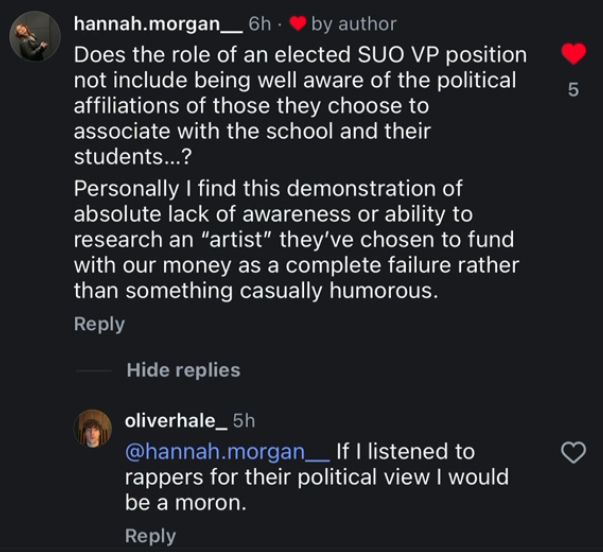
This next comment thread includes Hale insulting students who derive political significance from the music they engage with, as well as the following comments:
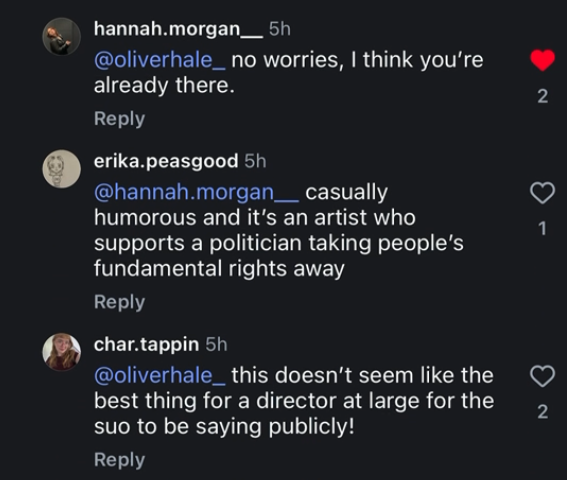
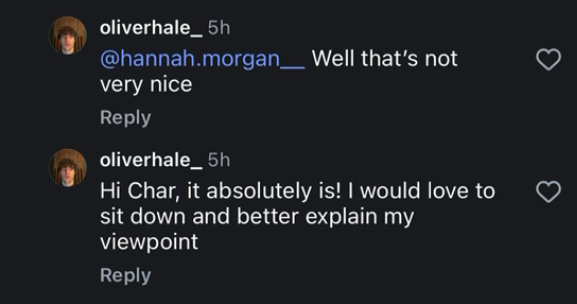
The tone of the last comment from Hale is difficult to decipher and The Phoenix is unsure if it was meant to be sarcastic, serious, or casual.
These comments from Hale directly conflict with the SUO’s Constitution which states the purpose of the SUO is “to represent students, receive complaints, and investigate problems and decisions that affect students.” Hale also violated the SUO’s Mission Statement “to ensure students’ rights are respected,” and “practice good governance.”
It also violates the SUO’s claim to be “[a]ble to ensure that all our membership and staff: Have their voice heard on issues that are important to them. Protect and promote their rights. Have their views and wishes genuinely considered when decisions are being made about their lives” as outlined in their Value Statement.
This Value Statement also features clauses on a “welcoming, friendly, and respectful [atmosphere]”, and “[encouraging] comradeship and interaction” which Hale has gone against. Many of the principles the SUO rests on have also been breached — community, integrity, and respect — and it is The Phoenix’s hope that accountability, their fifth principle, is upheld.
As of right now, the SUO has not publicly announced if Hale will be facing disciplinary action for these comments made against students. The SUO’s official response on Sandhu’s interview is also yet to be released.
In the meantime, The Phoenix remains committed to keeping its student body informed and encourages them to keep informing.