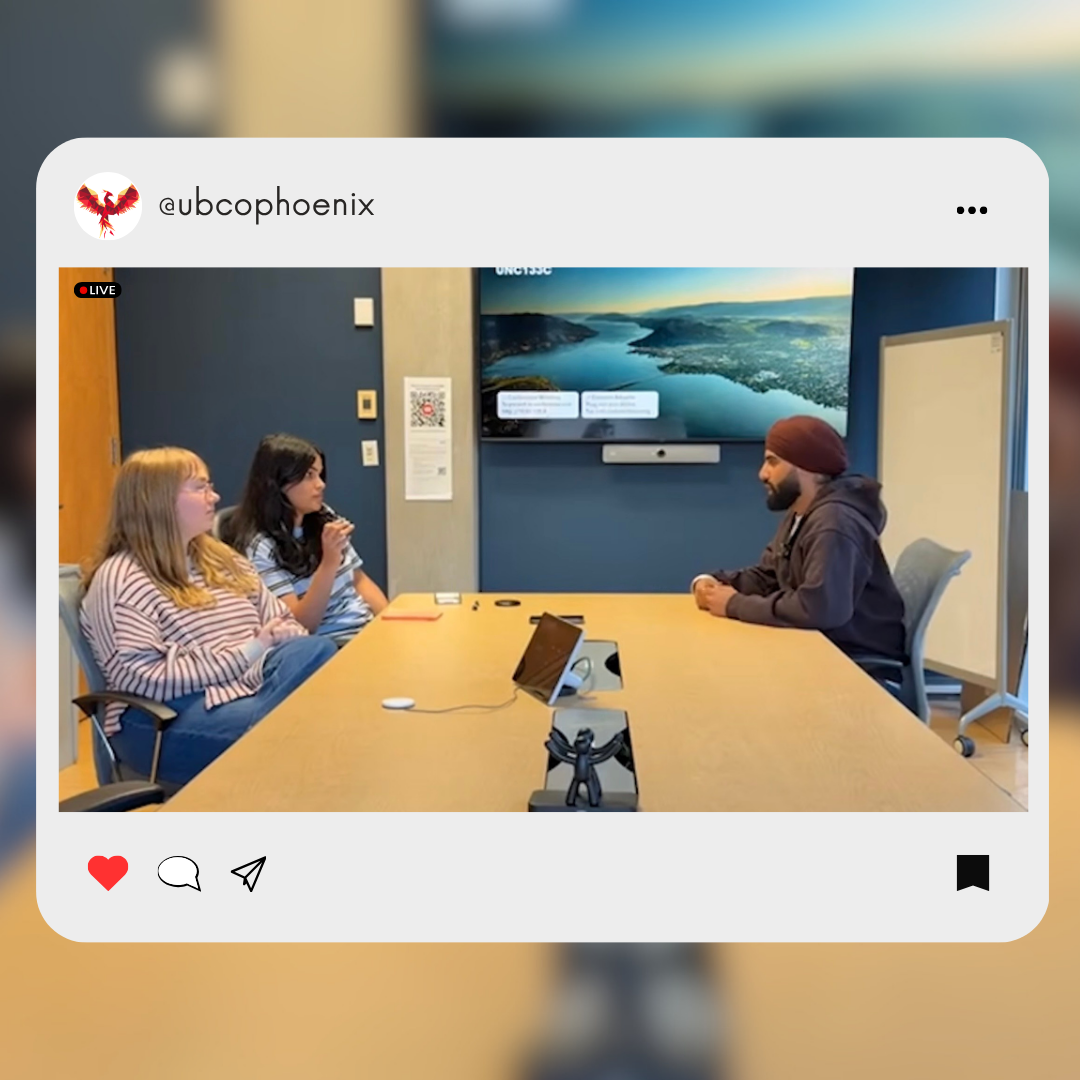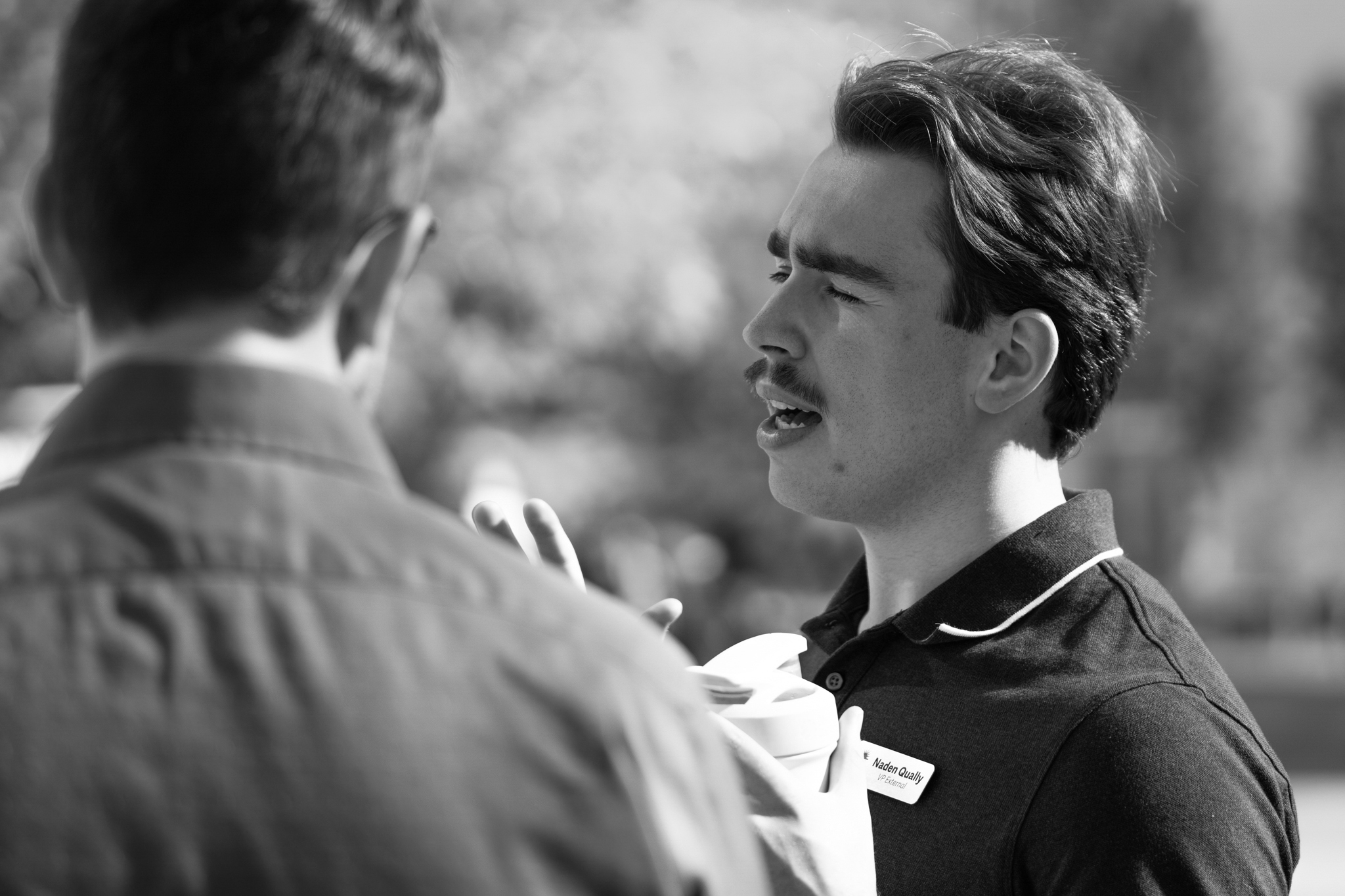
The Student’s Union Okanagan (SUO) general election held in April 2026 resulted in an almost entirely new board. Since taking office six months ago, President Olivia Lai and Vice President External Naden Qually have had a busy summer and start to the semester. On October 1, 2026, I had the opportunity to sit down with them and learn more about their experiences and what they have accomplished since April.
With both in their last years of university, Olivia and Naden have been involved with the SUO since the beginning of their academic journeys. Olivia, a political science major, shared that her passion for “leadership and community service” originated in high school. Upon arriving at UBCO, she learned about the SUO during her first week of orientation and decided to run in that year’s by-election. Although she was not elected, she continued to campaign and was later elected for the Faculty of Arts & Social Sciences Student Representative position, proudly stating that she has “basically been there since [her] first year.”
Naden, also a political science major, had a similar beginning. He mentioned that he has been interested in politics since grade 7. Encouraged by his friends who told him he would make a “good student politician,” Naden was introduced to the SUO by Kelly Yuste, who was looking for people to help showcase the many services of the SUO. In his first year, he became a student-at-large, particularly expressing an interest in advocating for policy, stating, “Since I got in, I’ve been very passionate about talking to the government and advocating for students.”
Reflecting on the previous year, during which Olivia served as Vice President External and Naden as Director-at-Large, I asked them to share their highlights and challenges.
As Vice-President External, Olivia took pride in her efforts to address affordability concerns and in alleviating food insecurity on campus. She emphasized the launch of the community meals initiatives and also mentioned the SUO’s collaboration with other student unions, such as the University of British Columbia Vancouver, the University of Victoria and Simon Fraser University. Their joint efforts were aimed to tackle issues such as “the rise of tuition for international students, the rise in costs for domestic students [and] hidden fees that institutions impose, [such as] paying for an extra building.”
Additionally, Olivia shared that they partnered with UBCV to advocate for $40 million dollars for climate change initiatives. She expressed pride in the advocacy work they accomplished, stating, “It definitely was not me alone doing it; it was a joint effort with my campaigns team and with the coalitions we formed.”
The most challenging aspect of her role last year was coordinating volunteers for local advocacy efforts. Olivia noted the difficulties in managing various groups and communities on campus and in ensuring that she could fairly advocate for everyone. She used the community meals initiative as an example, highlighting the need to cater to different dietary needs, especially when it comes to meat and plant protein options. In order to accommodate everyone, they were able to provide both options for many of their meals.
As director-at-large last year, Naden mentioned that a significant highlight for him was “reviewing a lot of [the SUOs] regulations and policies.” He specifically pointed out his achievement of creating an “enforceable transitional document policy” that new executives would sign when taking office. Although a previous policy existed, he noted that the wording was unclear and “not very legal.” His revision of the policy aimed to facilitate the transfer of institutional knowledge, ensuring that new executives were aware of what their predecessors had accomplished.
With this new policy, Naden sought to ensure a smoother transitional period for incoming executives, emphasizing transparency and mentorship.
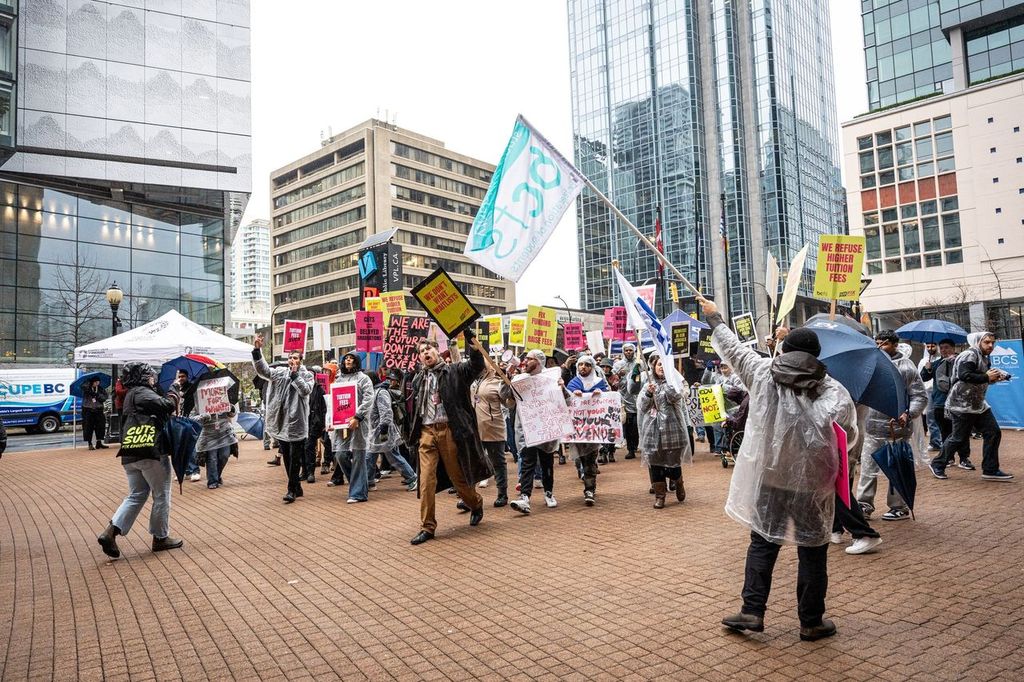
Another highlight for Naden was the opportunity to attend the BC Federation of Students Annual General Meeting last January, where they protested against removing the cap on tuition increases. He remarked, “It was my first protest, so it was a big highlight for me.”
Looking ahead to this year, I asked them to share how they have adjusted to their new roles and what they have accomplished since taking office.
Olivia shared that for her, “it was a big transition.” She specifically pointed to the newfound responsibility in managing a plethora of other committees and teams, expressing that she had to especially learn “how to be a good listener and to be respectful in different conversations.”
Furthermore, she went to Ottawa for the Federal Advocacy Trip in a joint effort with the Simon Fraser Student Society and the Justice Institute Students’ Union to address the concerns with the changing treatment for international students. Olivia added, “We also talked about other advocacy goals such as transportation and what that could look like for investment.”
As president, she has also focused extensively on collaboration with the university, noting monthly meetings with them. Furthermore, she mentioned that she has been “working a lot with the university, other partners and other student unions to do coalition advocacy and work on how we can advocate for the university itself.”
Naden stated that the transition has been relatively easy for him, attributing it to the fact that he’s a “really big people person [and] really like[s] talking to new people.” He further mentioned that having been around the student union for a while, he has mentors like Olivia Lai and Abby Newman whom he can rely on for guidance.
Reflecting on the past few months, he noted that they have been “really busy.” Naden also spotlighted the trip to Ottawa, where they were able to explain to federal MPS the “trickle-down effects of the upcoming IRCC changes in 2024” and how this will affect institutional budgets, forcing universities to shift costs onto students through ancillary fees.
While the MPs took these issues seriously and many expressed sympathy for students, Naden emphasized the need to reiterate the concerns, explaining to them that they “can't just leave students hanging.”
Following that, Naden spoke at the unveiling of the new recreation building. He also spent a significant portion of his summer “reestablishing connections with other student unions and building connections within the BC Federation of Students.”
Another major task for Naden this summer was planning the yearly advocacy budget. He commented on his success in getting the SUO’s advocacy budget increased and raising the honorarium for their research center facilitators. He also focused on planning for the community meals budget, explaining how he had to determine both how much funding to advocate for this year and how to secure that funding.
Olivia and Naden share many of the same priorities this year, focusing on affordability and promoting student well-being. Olivia specifically mentioned her desire to build more community on campus through “student-led programming and initiatives.” Moreover, she expressed plans to create a better channel of communication between students and the university.
Naden said his goals are primarily “government-related,” but he noted the challenges posed by the potential change in government due to the snap elections. Regardless of the outcome, addressing affordability remains a top concern. He expressed sympathy for students who “get frustrated when they hear student unions call for affordability because they expect it [immediately].” He emphasized that “unfortunately it can take years.”
Nonetheless, he plans to inform MPs about the rising costs students face, cuts affecting international students, and the importance for the post-secondary sector to remain receiving adequate funding.
“Another priority for me is explaining the Student Union Okanagan to all its members.” He noted his newly started SUO episodes series stating that he strives to "make more engaging content to get students to better understand the student union.”
He also highlighted the importance of ensuring the community meals program is successful during its second year of operations. While the SUO was unable to secure the same grant as last year, he plans to increase the number of meals provided in the second semester to balance the situation.
The last portion of our interview centered around the Board of Governors meeting which took place on September 23. Naden and Olivia presented to the board, highlighting the most pressing issues faced by UBCO and its students.
Their first point addressed the rising food insecurity at UBCO. They stressed to the board that 42% of students face food insecurity, thus making them reliant on various services provided by the SUO, such as Picnic, which offers free cooking classes and community meals.
They requested additional funding from the board, considering the ever-increasing demand for services that alleviate food insecurity. Specifically, they called for a multiyear affordability funding increase from $800,000 to $1.2 million, stating that this increase would “mean a lot to students.”
Next they addressed the discrepancies in the Work Study Program, especially concerning it in relation to UBCV. The Work Study program is designed to promote student engagement in their field of study while also providing an income to support their education.
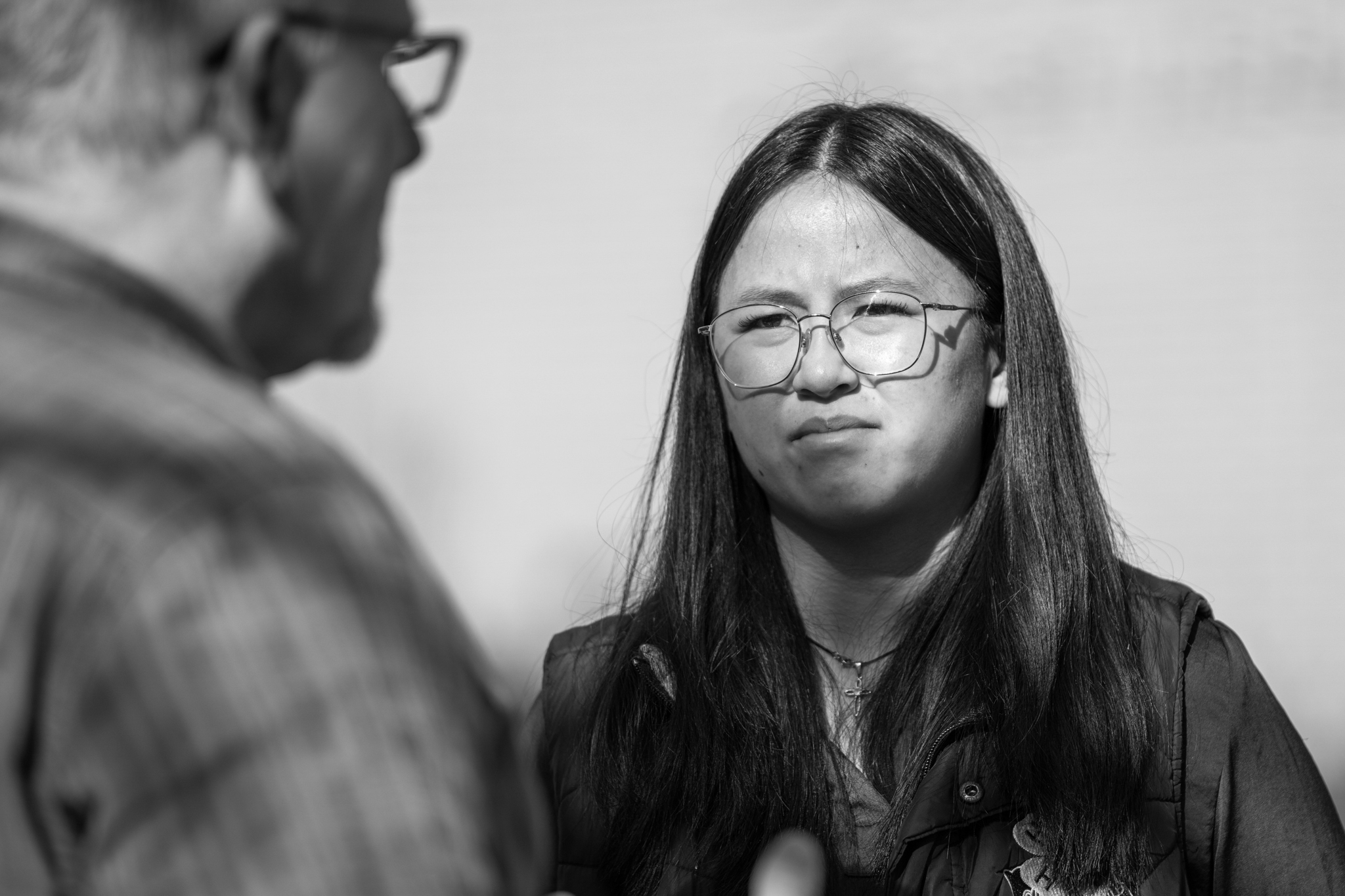
Naden highlighted the “amazing research” conducted through this program, calling UBCO a “powerhouse.” Despite the program’s importance in allowing students to engage in their studies without the burden of insufficient income, Naden pointed out to the board the program remains underfunded. He noted that 70 students were unable to access opportunities that were “advertised.”
This issue remains especially pertinent as the Work Study program is currently funded on an excellence funding that runs out after the 2027 fiscal year. Naden warned that if this program disappears, “UBCO [will be] left behind and [it will] lead to fewer students without opportunities and fulfillment."
“If you don't invest in UBCO we are not going to be where you want us to be. A lot of people want UBCO to grow,” Naden further commented. Olivia supported this sentiment, stating that she encouraged the board of governors to see UBCO as an investment opportunity.
They also advocated for the need for a new building, citing a lack of available seating and study spaces which affects not only students' academics, but the functioning of clubs and accessing school services. The SUO proposed that UBC partner with them to relaunch their plan in creating a new student union building, stating that it will foster community and belonging.
Despite their serious requests, both Naden and Olivia commented on the positive reaction they received from the board. Naden said that members expressed support for food insecurity and work study initiatives and many acknowledged the issues around UBCO being underfunded.
While any meaningful progress on these demands may take years to be resolved, both Naden and Olivia remain hopeful knowing that there are people on the board who understand their presentation and are aware of UBCO’s current situation.